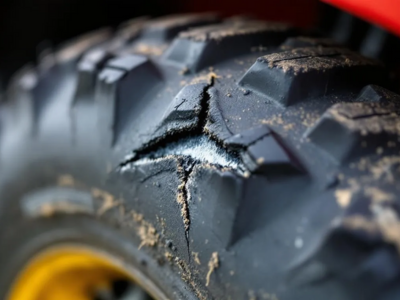
It is the sound every off-roader fears. You are miles from civilization, the engine is singing, the suspension is working its magic, and then—pshhht. The fun stops. The panic starts.
Unlike the rubber donuts on your daily commuter car that only have to deal with smooth tarmac and the occasional pothole, UTV tires endure a life of absolute punishment. They face jagged rocks, thorny mesquite, sticky mud, and vertical climbs. Because of this abuse, fixing them isn't just about saving a few bucks; it’s about making sure you don’t end up stranded—or worse, upside down because a sketchy repair blew out at speed.
So, what’s the verdict? Do you jam a sticky worm in it and keep sending it? Do you wait for a proper patch? Or is that expensive rubber now just a glorified swing for your kids?
Here is your no-nonsense guide to tire repair, explaining when it is safe to plug, when you need a patch, and when you absolutely must replace the tire.
TL;DR: When Is It Safe to Plug a UTV Tire vs Patch It vs Replace It
If you are currently staring at a flat tire on the trail and need answers fast, here is the cheat sheet:
- Plug It: If you have a small puncture (under 6mm) in the tread and need to get back to the trailer. It’s a temporary fix.
- Patch It: If the hole is in the tread, up to 12mm, and you want a permanent repair for regular use.
- Replace It: If you have sidewall damage, a gash larger than 12mm, or the tire is ancient (10+ years).
The Tire Plug: The "Get Home" Hero

Let’s be honest: the tire plug kit is the MVP of temporary trail repairs. It is the MacGyver solution—quick, dirty, and effective when you are stuck on the side of a mountain. But just because you can plug a tire doesn't always mean you should.
When to Use a Plug
Think of a tire plug as a field dressing for a wound. It is designed to stop the bleeding (or air leak) long enough to get you to safety. Plugs work by expanding inside the hole to seal it, but they don't actually fix the structural damage to the rubber.
You are cleared to use a plug if:
- The hole is small: We are talking nails, screws, or thorns. Specifically, the puncture needs to be smaller than 6mm (about 1/4 inch) in diameter. According to the Tire Industry Association, any repair larger than this in a radial tire is asking for failure.
- It’s in the tread: The damage must be in the center tread area, at least 2 inches away from the sidewall. The shoulder of the tire flexes too much for a plug to hold.
- It’s an emergency: You are on the trail and need a temporary fix to limp back to base.
The "Do Not Plug" List
If you try to plug a hole larger than 6mm, you are asking for trouble. The plug simply won't create a tight enough seal. Furthermore, if you are planning on high-speed desert running or aggressive rock crawling, a plug is a weak point waiting to fail.
Top Gear Tip: A plug is perfect for recreational riders who need to save a weekend ride. But if you use your UTV for heavy work or racing, relying on a plug is like fixing a bridge with duct tape. It might hold for a minute, but do you really want to drive over it?
The Tire Patch: The Professional Solution
If the plug is the field dressing, the tire patch is the surgery. This is the reliable repair method that, when done right, can last the entire life of the tire.
Why Patches Are Superior
Unlike a tire plug, which is jammed in from the outside, a patch is applied to the inside of the tire. This requires taking the tire off the wheel (a pain, we know), but it allows for a crucial step: inspection. You can see internal damage that is invisible from the outside.
The patching process involves vulcanizing rubber to the inner liner, creating a permanent solution that seals the air in and restores the tire's integrity. This is often the only repair method recommended by manufacturers for on-road use, and it applies just as strictly to the high-stress world of UTVs.
When to Patch
- Larger Punctures: Patches can handle holes up to 12mm (1/2 inch) in the tread.
- Irregular Damage: If you ran over a jagged rock that left a weirdly shaped hole, a plug won't seal it. A patch, however, is flexible and can cover irregular tears.
- High Performance: If you race or drive like a lunatic (you know who you are), the extreme heat and centrifugal forces at speed will spit a plug out. A patch stays put.
For the most robust fix, many experts recommend a "combo repair"—a plug or patch combination where a rubber stem fills the hole (keeping water out) and a patch seals the liner. This is the industry standard for a permanent fix.
The Danger Zone: When to Replace the Tire

Here is the hard truth. Sometimes, a tire is just dead. Attempting to repair safety-critical damage isn't just "thrifty"—it's dangerous.
1. Sidewall Damage = Game Over
This is the golden rule of off-road tires. If you have a cut, puncture, or bubble in the side wall, you must replace the tire.
Why? Because off-road tires flex. A lot. The sidewall acts like a hinge every time you hit a bump or crawl a rock. No glue, plug, or patch can hold together rubber that is constantly stretching and compressing. Even a small puncture in the sidewall can lead to a sudden, catastrophic blowout. As noted by safety experts at NHTSA, sidewall structural integrity is non-negotiable.
Note: You can plug a sidewall just to limp back to the trailer at 5 MPH, but that tire is trash once you get there. Do not drive it at speed again.
2. The "Too Big to Fix" Rule
If the hole is gaping—specifically, larger punctures over 12mm (1/2 inch)—there is no magic repair method that will save it. The structural integrity is gone.
3. The "Swiss Cheese" Factor
If your tire has more plugs than rubber, it’s time to let it go. If you have multiple punctures within a 16-inch area, or more than 5 repairs total on the tire, the structure is compromised.
4. Age Matters
Rubber rots. Even if the tread looks fine, if the tire is over 10 years old, the rubber has degraded. It is unsafe. Replace it.
UTV-Specific Stress Factors
Why are we so paranoid about UTV tires compared to a lawnmower? It comes down to environmental stress factors.
Extreme Terrain Impact
When you are rock crawling, your tires deform and wrap around obstacles. This extreme flex can cause a plug to work loose if it isn't perfectly seated. What works for a car on a highway might fail instantly when you drop your UTV's weight onto a sharp ledge.
Speed and Heat
If you are blasting through the desert, your tires get hot. Really hot. Heat softens the adhesive on plugs and patches. If you rely on a temporary fix for a high-speed run, you are rolling the dice. High-speed centrifugal force can literally pull a plug out of the tire.
Load Distribution
UTVs are often loaded unevenly with coolers, tools, and passengers. When you are on a side hill, all that weight shifts to the downhill tires. A repaired tire might hold up on flat ground but fail under that dynamic side-load. Always check your vehicle manual for load ratings before trusting a repair.
How to Assess Your Tire Damage (Like a Pro)

You can't make the right call if you don't know what you're looking at. Rushing this step is how you end up stranded twice in one day.
Step 1: Clean and Measure
First, get the mud off. You need to see the actual hole. Use a water bottle and a rag to clean the area. If the object (nail, screw, dinosaur bone) is still in there, pull it out carefully and look at the shape of the hole.
- Top Gear Fact: A US Quarter is about 24mm wide. Use that or a ruler to estimate the diameter of the damage.
Step 2: The Two-Inch Rule
Measure the distance from the puncture to the edge of the tire shoulder. If it is within 2 inches of the sidewall, do not plug it. The stress in that transition zone is too high for a safe repair.
Step 3: Check the "Inside of the Tire"
This is the most skipped step. If you have the tire off the bead to patch it, run your hand (carefully!) along the inner liner. If you feel steel belts poking through, or a pile of rubber dust (called "run flat" debris), the tire is toast. Internal damage means the carcass is destroyed, and no patch will fix that.
Step 4: Review Repair History
Look at your tire. Does it already have three plugs in it? Is there an old patch lifting up? If you are constantly adding repairs to the same tire, you are just delaying the inevitable. Replace the tire and save yourself the headache.
Repair Method by Scenario
To make this dead simple, use this table to determine the best for your situation.
| Repair Method | Best For | Size Limit | Allowable Location | Durability |
| Plug | Emergency trail fixes, light use | Under 6mm (1/4 inch) | Tread area only | Temporary fix |
| Patch | Permanent repairs, regular use | Up to 12mm (1/2 inch) | Tread area only | Permanent repair |
| Replace | Safety-critical damage | Any | Sidewall damage (Anywhere) | Brand new tire performance |
Summary: Don't Gamble with Rubber
Off-roading puts unique stress on your machine. Sidewall damage, rock crawling, and dynamic loads mean that a repair that works on a Honda Civic might fail catastrophically on a UTV.
- Plug it to get home.
- Patch it to keep using it.
- Replace it if the sidewall is hurt or the hole is huge.
Remember, a tire plug is a survival tool, not a restoration. If you are in doubt, err on the side of caution. Spending money on replacing a damaged tire hurts your wallet, but a blowout at 50mph hurts a lot more.
Drive safe, and keep the rubber side down.
